Sunday, April 4, 2010

Decaffeinated

So I'm at the beach house with the in-laws and today--day three--I hit a wall.  Not in anger or frustration,  although that would be understandable because the in-laws are narcoleptic, alzheimer-ridden control-freaks with an aversion to hearing aids.  WHAT.  No.  I hit a wall because apparently, SOMEONE (read: mother-in-law) has been making decaf coffee unbenownst to anyone else here and passing it off as actual coffee.  I guess that would explain the narcolepsy.   And the headaches.  And my ill mood.  This morning at the beach this interchange actually took place:

Redneck Dude in homemade boat with tattered travesty of an American flag fluttering listlessly from one of the downriggers beaches his boat. 

Me:  DUDE.  Are you American?  I've seen Jihadists treat the flag with more respect than that. 

Redneck Dude's white trash drunken girl friend falls off the boat, proceeds to squat and without her ass even being entirely covered by the water proceeds to pee in about 18 inches of tide. 

This infuriates me beyond the pale.  I try to sick my dog on them, but he is a pathetic Retriever and only manages to get ass-humped by the Chocolate Lab twenty feet up the beach.  He comes back with a mouth full of seaweed and drops it at my feet.  I tell him he should be ashamed of himself, as no self-respecting dog should allow that kind of behavior until at least the third date.

I have no idea why I'm so irritable.  I'm at a gorgeous beach; it's a beautiful day.  I have my kids and my husband and my dog and a good book.

I tell JP that if the woman sitting in the beach chair next to me had spent as much money on a nutritionist for her obese child as she had for her fake breasts she could have prevented  a certain lifetime of bullying, diabetes, and high cholesterol.  Oh well.  Single moms with fat kids have to compensate somehow.

I am an evil person.

Back at the beach house, I go for more coffee.  The pot is empty.  I go to make more but can't find coffee beans anywhere.  Just this dirt-like substance in a green can.  I think they call it decaf.  I corner the mother-in-law. 

Me:  Is this what you've been making the whole time?
Her:  Well, we were out of regular.

I stare at her wordlessly for about twenty seconds. 

I get in the minivan.  Someone on this island has to have real coffee. 

There are three convenience stores on Harker's Island.  One is closed for Easter.  The other two have no coffee.  DO YOU HEAR WHAT I'M TELLING YOU?  Gas stations with no coffee.  The best thing I can find is Frappucino in a bottle.  I buy it with a Coke chaser. 

It is terrible.  I drink the Coke instead on the drive home, which is only four minutes long.  Back at the kitchen, I consider microwaving the vile frappucino in an attempt to make it taste more like real coffee.  JP tells me this is a bad idea.  Luckily, by now the caffeine in the Coke is kicking in and I'm beginning to see reason.

I drink the Frappucino. 

JP will not take me back to the beach, despite my assurances of adequate caffeination and better behavior. 

Also, the Retreiver seems a little traumatized.

Sunday, March 28, 2010

Palm Leafs for a Funeral

This sadness.  This outrageous, uncalled-for sadness.  This grief with no name.  This moment, this lifetime, a tragic ending.  This Not Supposed To Be.

This opening of possibilities, this testament to the worst that can happen.  The worst can happen.

This sadness the cord that both feeds and strangles me.  The young death.  The birth slept through.  This nonconsent.  This potential, missed.

These bright flashes, brilliant and certain.  This fallout.

Palm leafs for a funeral.  This holy grief.  Who is blessed?


Friday, March 19, 2010

Health Care Reform, my way.

BE IT ENACTED BY THE LEGISLATURE OF THE STATE OF MOMMYTOWN:

Section 1.  When seeking presciption drugs or a sick note for work or school, a WebMD diagnosis shall suffice except in the case of Schedule III controlled substances which will require such information as can be printed from your home computer from google.com/health. 

Section 2.  Pediatric patient waiting rooms shall be furnished with inflatable bounce houses for well children; ice cream sundae bars for sick children.  Shots shall be abolished forthwith and as such all vaccines, antibiotics, rabies treatments, and novacaine shall be administered via medicinally-infused temporary tattooes of either the Star Wars or Hello Kitty variety.

Section 3.  Highly technical, jargon-filled diagnoses shall be renamed with humor and according to the common vernacular.  Eg: ADHD shall be known henceforth as Bad Kid; allergic rhinitis to be reclassified as Stuffed-the-Fuck-Upedness; Type II Diabetes as Doughnut Syndrome. 

Section 4.  In response to the overwhelming popularity of hot TV doctors, all physicians must be exceedingly attractive and preface their names with "Mc."  Congress does not forsee a conflict of interest between hot Irish American TV doctors and the growing population of Indian American medical doctors, as Indian men are incredibly attractive once they shave off their moustaches and McPatel sounds just fine.  As such the Hippocratic Oath should be ammended to include the verbiage "First, do no ugliness."

Section 5.  Pre-existing conditions immediately and unequivocally qualify the Patient for Vicodyn and Bugs Bunny Band-Aids, as those Patients presenting with established illnesses deserve extra TLC.

Section 6.  All women having given birth and/or breastfed a child shall be entitled to breast augmentation or reduction, tummy tuck, vaginoplasty, liposuction, and a lifetime supply of SSRI's.

Section 7.  Botox is not a privilege, but a universal right.

Section 8.  End of Life Counseling (aka Death Panels) and abortion coverage shall be made available, free of charge and in exclusivity, to fans of  Glenn Beck and Rush Limbaugh. 

Section 9.  Every effort must be made to promote preventive health measures.  As such, gynecologist visits and mammograms shall be rewarded with Nordstrom vouchers.

Section 10.  CT scanners must broadcast Black Eyed Peas or Iz to decrease symptoms of claustrophobia and ennui. 

Section 11.  No officer of a private health insurance company may earn more money than God or Oprah Winfrey.

Section 12. There shall be a cure for the common cold, autism, AIDS, and all forms of cancer.

Section 13. All laws or parts of laws in conflict with this act are hereby repealed, reduced, or recycled.

Section 14. This act shall become effective on April 1, 2010 upon a majority vote by honest, working parents of the non-Vanderbiltian class.

Wednesday, March 17, 2010

Disclaimer

OK I have to say it.

The entries published herein are works of FICTION (stop freaking out Aunt Lisa!  Dad--that's not you!), and all names, characters, places, and incidents either are the products of my imagination or are used fictitiously or are entirely too funny/ridiculous to go without mention. Any resemblance to actual events or locales, organizations, or persons, living or dead, is probably on purpose so I suggest you get over yourself. 

Should you find yourself suggested, parodied, named, or otherwise outrightly called out for the purposes of my silly musings feel free to meet me behind the playground after school.  I dare you.

Furthermore, should you even THINK about reproducing, copying/pasting, or otherwise jacking without my permission the content posted here I WILL SHANK YOU. 

Finally, should you feel slighted, left out, or otherwise unappreciated by me, my family, or my Gregories please cease and desist before polluting my blog with the indecency that is your drug-addled existence and mind your vagina. 

© Becky Pennington Powell

Thursday, March 4, 2010

Constellations Visible and Invisible

The year she was raped Hannah learned to make lists. The very night it happened—while it was happening, actually—she had named to herself at least fourteen constellations visible and invisible in the Carolina blue night sky while a man stained her with the smell of gas. Orion Little Dipper Big Dipper Taurus Scorpio. Stars and the light of a Texaco sign stop nobody.


Tonight, driving from Chapel Hill to Clayton, the highway a long, lean path for a mind to just lie down and stretch out on, she thinks again of stars. How even the universe—chaotic, infinite, and uncalled for—can be ordered and listed, quantified and named. How the trees, thick as her hair and blacker, curtain off the brightest city lights and sheet each side of the highway like surgical draping.

There was a girl in Inpatient this morning, overflow from the hand clinic, the girl’s usual therapist taking a personal day for some or other crisis. Fire flood pestilence. Both the girl’s hands had been sutured and splinted. Hannah picked words like berries from her charts, scratches, slashes of doctors’ writing. Strawberry raspberry mayhaw blackberry. Battery. Assault. Multiple traumas. Tendon lacerations, both hands, volar and dorsal surfaces. Rotten berries, bee-stung, sour, and bruised.

What had happened to her? Jesus wounds—both palms split open and through. Hannah noted her meds, contraindications. Motrin Valium Percocet Darvocet. Preven, the pill for the morning after.

She retrieved the girl from the waiting room. “Joelle Pickering?”

The girl looked faded. Her skin the color of clouds.

“Hi, I’m Hannah.”

The girl followed her into the treatment room. She was thin, her eyes heartbeating— too-full and pulsing—across the machines, the adaptive equipment in the room. She’d landed in the first chair from the door and pushed herself back to the wall hard enough to make sound, a sharpness echoing in the wide-open room.

Adaptation was Hannah’s job. A skill she taught, the law of nature she drew from her patients—the vestigial made necessary and exterior. Hannah picked a chair of the same size from the therapy table, faced it toward Joelle. When she sat, their knees nearly touching, their legs made a work surface.

“How are you today?” Joelle looked at the door.

“Your pain?”

Hannah took the right hand, the one that needed her most, braced herself against the quick gasp of tearing Velcro as she removed the first splint. It sounded like a choke, like the tearing of clothes.

Not being able to breathe. The lights were too bright for this to be happening. She had picked the most brightly lit station. How was this happening? What if someone pulled up, saw her here, naked and naming stars? Andromeda Orion Haley.

“Glad to be out of those splints, to be sure.”

To be sure. Joelle’s eyes had rolled over and through her, reaching like surf and then drawing back as quickly. Hannah had to be careful. The undertow of her patients’ trauma could suck her right under their sea. Pacific Indian Arctic. Their clawed hands scarred and reaching. A hospital was no place for sympathy.

“You normally see Liz Baileycroft, don’t you?”

Joelle still looking at the door.

“She couldn’t be here today. I’m sorry. I’ll be filling in just this time. She has kids? I think one of them has strep.” Joelle’s hands were locked, flat, fingers splayed in each direction from weeks in splints. The wide stretched fingers of the sleepwalker, the magician, the traffic cop. Abracadabra. Slow down. Wait. Hannah noted the condition of the scars, the degree of swelling in each hand. “That’s the worst part about working in hospitals. You become a carrier, and everyone you live with gets exposed.”

She loosened Joelle’s hands of their frozen gestures, flexed each finger toward the scars that lay coiled and raised as snakes. Moccassin garden cobra. Good range of motion.

“I want you to take my hands now and squeeze. Good.” Poor muscle strength for six weeks post-op. Joelle let go and placed her hands in her lap without looking at them.

“Tell me how you’ve been feeling. Have you noticed improvement? In your hands?”

“Most of the time I just want to die.”

Joelle’s hands lay slack in her lap, palms up and welcoming no one.

“Have you told, have you told anyone else about these feelings, Joelle? Your parents? A, a counselor?”

“I can’t handle bullshit sympathy. Look, I don’t want to talk about it.”

“I can talk to your doctor, if you want. Get you a consult? There’s a lot of help out there.”

“Whatever. Has it been an hour yet?”

“We have a lot of work to do. I need you to help me. Try to get the most out of your session today. So…let’s start with some light exercises.” She handed the girl a putty ball. “Squeeze.”

“No.”

“Again.”

“No,” she said, but she did.

Hannah watched her patient. Her eyes had fallen, her whole face washed away and collecting like silt at the corners of her mouth. She had been pretty.

Hannah took her right hand, the one that needed her most, flexed and massaged each digit, pinching the end of each fingertip for circulation. “Tell me if anything I do hurts you.” Hurt. Joelle had been hurt. Her hand in Hannah’s lay heavy and dead.

The road skinnies down to two lanes. Hannah merges right, sets the cruise control as she passes 54. Twenty-three miles more. She names to herself each exit from the hospital to the house. Page Road fifty-five Durham Freeway Cary Parkway Jones Sausage Walnut Gorman Wheeler.

She scanns the dashboard. She can make it to Forty-Two with this much gas.

“You’re going to need these hands again. Don’t you want to be able to write checks? Hold a baby? Make a phone call?” Hannah pulled a flexor ball from the drawer beneath the therapy table. “Liz has given you one of these, right?” Joelle nodded. “You’ll need to do this one three to five times a day. You just squeeze the ball with as much pressure as you can,” Hannah demonstrated for her, “ten to fifteen times.”

Joelle was looking at the door again. “The other lady, she already showed me all this.”

“And I can tell from your scars that you’re not doing your exercises. The ball, the tendon glides, they keep your hands flexible, make them stronger. If you don’t do them, scar tissue will begin to adhere to your tendons and your fingers will become immobilized.”

“I don’t care.”

Hannah thought she would talk to the doctor in Inpatient, see about some meds. Zoloft Xanax Prozac Serazone.

“Are you sad, Joelle?”

Joelle didn’t answer.

“Irritable? Sleepless? Do you cry often?”

Nothing.

“What did you like to do before—before you hurt your hands?”

“I liked to fuck.”

God. “I know this is painful, Joelle. I know it hurts.”

She had been hurt.

“Do you know what happened to me?” Joelle asked.

Assault. Multiple traumas. Counting constellations and the smell of gasoline. A gun and a dirty bandanna.

“You have a lot to look forward to, Joelle. One thing I know—everybody heals. I promise.”

“Don’t you know what happened to me?”

“Let’s work on the pegboard. Have you done this with Liz?” Hannah retrieved the handmade board and pegs—a gift from a veteran patient healed with pine and an awl. She sat down again, set the board in Joelle’s lap and the pegs in her own. “I want you to try at least one of the pegs with your left hand, okay?”

Joelle’s hands worked like claws, four fingers seamed at the knuckles and struggling to grasp the skinny pegs. Finally she pincered one. It fell to the floor on the trip from Hannah’s lap to hers.

“Fuck it. This is stupid.”

Hannah resets the cruise control to seventy-four. She’d botched the session. She worked in Inpatient—not Psych—most of her patients were hip-replaced geriatrics and car accidents. She wasn’t used to patients like Joelle. She’d worn her jeans so low on her hips that her panties showed. She didn’t wear a bra. Her mouth hung slack and open. Asking for something.

Hannah led Joelle to a seat at the paraffin table. She dipped Joelle’s hands in the warm wax. “Doesn’t that feel wonderful? Sometimes when—”

“Please don’t—” Joelle said.

Don’t touch me.

“I’m sorry—I—”

Stop.

“Don’t touch me.”

“It’s okay, Joelle. You’re okay.”

PTSD. Insomnia fear of crowds and the smell of gas, nightmares and invasive thoughts. A touch was a punch and a red bandanna, devastating.

Hannah raised her hands, palms out, an offering. A blessing. People needed to be touched. Hannah remembered a patient—fifty-something, female, divorced—she’d lost a foot to diabetes. Ursula. She’d wept when Hannah took her hand, excited by some small triumph. No one’s held me in years. People needed to be touched.

He had come from behind. She’d felt his hand where it shouldn’t be before she ever heard him. Smelled him. Tasted sweat in a mouthful of red bandanna.

She placed Joelle’s waxy hands in loose plastic gloves to seal in the heat and moisture. There was time enough now get a Diet Coke—come back in ten minutes to finish the session. She looked at Joelle not looking at her hands. The high, artificial arch of her eyebrows, the black pencil fault line on her lids, the tracks and pits in the skin of an otherwise pretty face. She had been pretty. It would be hard to put on makeup with both hands splinted and heavy.

The therapy room was empty and cold. Quarter to four and everybody gone. An empty doughnut box on the table and none of the usual shuffling and grunting and false, false cheer.

Sometimes I just want to die.

“How do those hands feel now?”

“Good, I guess. It’s warm. What is this stuff supposed to do?”

“Relaxes your muscles, your tendons. It helps, too, to soften the scars.”

She held both of Joelle’s hands at once, massaging each palm, feeling the knots of thick, pink scar beneath the plastic gloves, the tissue-paper skin. What had happened to her? “Do you want to talk about it?” Hannah asked. “Your injuries? About what happened to you?”

“No.”

“Have you talked to anybody about it?”

“People will think I’m a slut.”

“You’re not.” Shut up. Shut the fuck up. “Have you talked to your mother?”

“She can’t stop crying. She can’t talk about it.”

“Your dad?”

“Not my dad.”

Hannah ventured a smile. Iknowithurts. “You can talk to me.”

Joelle looked away.

“Victims often feel responsible for what happened to them. They feel ashamed—like it was their fault.”

It was her own fault. The interchange, the gas station, the choking and the stink of sweat. She should have gotten gas in the morning. She should have seen him coming—the red bandanna on his neck, his dirty blue jeans.

“It’s not your fault.”

“I shouldn’t have been there. I shouldn’t have been so drunk.”

She should have paid attention to what was around her.

“I don’t want to talk about it.”

I know where you live, honey. You tell anybody, I’ll kill your puppy, your baby, whatever you got around.

Fourteen constellations and dirty blue jeans.

The girl’s lips were big on her face. Her eyes too wide and wanting. Hannah wanted to stop talking about it.

“There wasn’t a gun. Doesn’t that make it my fault?”

Her fault for wearing perfume that day. Gardenia orchid rose magnolia. Scented flowers attract bee stings.

“I stopped fighting him. I was scared.”

She’d been scared.

“Sometimes I wonder if it even happened. I mean, the way I remember it. I think maybe I made it up in my head. My dad says I just did it for attention, you know?”

What had happened?

“Like, maybe I dreamed it.”

Hannah fit a splint back on the girl’s right hand. The one that needed her most. The girl’s fingernails were ragged and thin, torn paper edges.

Hannah knew what had happened to her. This girl, her heavy makeup and skinny clothes, her nipples showing through her shirt. She had swelled and crested among the boys, bobbing in the sea and sunlight of her own drunkenness. Black Caspian Mediterranean. Asking for it.

“I never asked for this.”

Asking for a fight, for the one act play that would make her tragic and watched. She would have hit him first. He’d have pushed her—into a fence, onto broken glass. Torn her hands.

“There was this party? At Kaylie Shockley’s? We were drinking grape juice and Everclear. After a while, like, I got pretty drunk. I crashed in Kaylie’s room. Everybody else was still downstairs. Pretty lame, huh?”

Hannah said nothing.

“There was this guy—from another school, I think. I didn’t know him, anyways. I woke up and he was just—in the room with me. He just started hitting me like out of nowhere and the music was so loud and nobody heard me from up there and he kept telling me to shut up.”

I said shut the fuck up.

“There was a bottle. A broken bottle.” She turned her face to the window. A purple line, puckered and raised, slithered from behind her ear and down. “He raped me.”

“We’re through now,” Hannah told her.

“But—”

“Liz will see you this time next week? All right.”

Sometimes the lifeboat goes down with the rescued. In their panic, the drowning drown the lifeguard. The water pulls her. She tires of treading. She passes the Texaco, thinking on the names of stars. She can make it home on vapors.

Wednesday, February 3, 2010

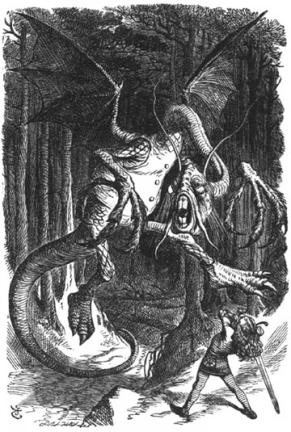
Insomnia is a Brillig Bitch and Other Meditations on the Frumiousness of ML.

`Twas brillig, and the slithy toves
  Did gyre and gimble in the wabe:
All mimsy were the borogoves,
  And the mome raths outgrabe.
                          - Lewis Carroll
                          (from Through the Looking-Glass and What Alice Found There, 1872) 


Sigh. I'm so sleepy I IS THAT A UNICORN PRANCING ACROSS THE CUL DE SAC oh never mind. Yawn. I've been up since 2AM. You? One night I'll learn to quit fighting my wily bogeyman and just get out  the bed when it so obviously, unequivocally, and indisputably appears that I'll not be revisiting dreamland again ante this meridiem. Really, it's a waste of imaginative energy and my heightened sense of drama to spend four hours each godawfully EARLY morning brooding over last year's Tax Deductions of Questionable Legality and the boy's heart arrythmia and the plight of the orphans of Haiti and OH MY GOD WHAT IF A COMET REALLY IS ON TRACK TO PUMMEL THE PLANET AND BRUCE WILLIS WAS DEAD ALL ALONG (curse you, M. Night. Shyamalan and I don't believe that's your real name either!) or I'm Pretty Sure That This Twitch In My Eye is MS.

And I get foot cramps. Paralyzing, agonizing, My-Toes-Are-Trying-To-Make-The-Vulcan-Salute-Entirely-Against-My-Will Cramps.

AND everyone in my house snores.  Seriously.  It's positively cacophonic.  Husband, children, dogs.  Cat.   OH HAI NALA ARE YOU FINALLY DYING I KEEP EXPECTING TO HEAR A DEATH RATTLE AT ANY MOMENT BUT INSTEAD IT APPEARS YOU HAVE SLEEP APNEA.  (purr/snore/suspend breathing...purr/snore/suspend breathing)

I should just slay the insomniac jabberwock, rise up from the covers and channel my uffish thoughts into writing the Great American Novel.  Burble, burble. Snicker-snack.  Really, what else is there to do at three in the morning but fire up the desktop (note that I mean this expression as the phrasal idiom it so obviously is in that I have successfully avoided setting fires at night ever since I fell back to sleep after having placed a frozen pizza in the oven only to wake up to hours later with the fire alarm screaming and a lump of charcoal in my new GE Profile built-in convection oven) and let the creative juices flow.

(Diagram THAT sentence, bitches....)

Sadly, at three in the EVER LOVING MORNING my words come out  more mimsy and outgrabed than Carrol's Walrus and soon I can't find any more of the little scoundrels and my stories fall flat as matzo.  Do you know what I can find a lot of at three o'clock in the morning?   Porn.  And lolcats.  Neither of which are conducive to my elbowing my way past Steinbeck and Vonnegut.  But damn they're funny.


Sunday, January 31, 2010

ARIA Chapter One

“Goddammit, Grace, when are you gonna stop being such a fucking little primadonna?”
                His words smolder in her ears, scald her face with an anger that blisters.  Grace is hot.  Hot to the touch.  Flowers would wilt if she got too near; children would catch fever.
                Daddy never gets the words right.  Especially when he’s mad at her.  Like when he told her she had distemper after popping Tommy Barbour at school, even though everybody knows that distemper is a dog disease and Tommy Barbour deserved every pop he ever got.
Grace makes her way now through a bedroom where thick curtains and drawn shades make seeing tricky.  The air is thick, dark, beer-scented with a hint of White Shoulders. 
                She tries to wake Mama to ask her opinion on this fresh and unfamiliar insult.  Primadonna.   But Mama won’t answer.  Won’t even look at her.  Her top lip is the wrong color.  Grace sees the purple even in the dark—a fat grape, swollen, rancid.  
“Go play in the back yard, honey.”  Mama looked past her earlier this clean blue morning.  Through her.  Grace’s Daddy had been up for only a few minutes, but he was already good and mad.  “Look what you made me do,” he’d said, his voice cutting through the sound of her mother’s sobs.  
                 Grace crumples the word up in her head, sets fire to it. 
                She finds it in the dictionary she keeps in her room, “the principal woman singer in an opera.”  Well she does like to sing, but her father wouldn’t know.  He fell asleep at her Christmas recital and snored all the way through the Hallelujah chorus.  She keeps reading: “a temperamental, vain, or arrogant person.”  She thinks her father’s insults usually say more about himself than about whoever it is he’s yelling at any given moment—which is most of them.
                Primadonna.  This morning he was showing off her school uniform for whichever one of her parents would look at her.  Of course, Mama’s eyes were still closed and it didn’t look like Daddy’s had achieved single vision.  She was imagining she was some big city model that probably every girl in the whole world wants to look like.  Bulbs flashed, the people whispered (“they say she is smart, too—lucky girl”) until the reality of her unglamorous self tested her father’s patience.
                Grace is starved.  She thinks about eating a bowl of cereal, but all this morning’s meanness has made her stomach angry and ravenous.  She wants eggs, bacon, and the kind of biscuits only Mama can make.  Grace tried to make them once, but she burned her fingers putting them in the oven and Daddy had smacked her for being so stupid.  She tromps back to her mother’s bedroom, throws the door open with all the fierceness of a hungry warrior princess.  “I want breakfast.” 
Mama squints her eyes at the light Grace has let into the room, winces, and pulls the covers over her head.  “Let Mama sleep, honey.”
Grace walks up to the bed and pulls the covers back, exposing her mother’s face.  The ugliness of her mouth makes Grace even angrier.  “I said I’m hungry.”  Mama won’t open her eyes.  “Get up!”  Grace can’t stand it.  “You’re being lazy!”
Mama rolls over and pulls the covers back over her head.  “You’re acting just like your daddy, Grace.  Go get you some cereal” 
Grace Honeycutt is probably the only girl in both Carolinas with no middle name to punctuate her first.  Instead she has acquired a whole string of first names—there’s Goddammit Grace, Jesus Christ Grace, Why Can’t You Play Nice Grace, and this, her personal favorite: You’re Just Like Your Father Grace.
                Well she’s not.  Her eyes are Gulf Stream bluegreen—not clear cloudless Honeycutt blue.  She hasn’t half the mean streak of her daddy’s people and she prefers Kool Aid to Jim Beam any day.   And most importantly, she loves words and she knows how to use them.  Sometimes she just says “tabernacle” out loud for the sheer joy of it.  Wonderful word!  Fills up her mouth like taffy, chewy and sweet.  There’s not one Honeycutt down east with any use whatsoever for a thesaurus.
                Her stomach rolls around inside her.  Maybe she will eat cereal.
                At school she’s studying to be an actress.  Well not really—she is studying Math and Language Arts and Social Studies and Science and the Scriptures but all the while she’s fooling every last one of them.  She’s like Ava Gardner who came from this very town and was very pretty and a really good actress but she’s dead now.  Grace, too can pretend to be happy and smart but not clever ‘cause clever gets you detention or worse and a Christian but not a Catholic because they don’t hold with that business about the saints and the Pope and the rosary here at the Lighthouse Bible School (Non-Denominational.)  
Today during Language Arts Grace can’t even finish the poem she’s supposed to write.  She can’t think of a single word that rhymes with prima donna and that’s just not like her because she knows lots of words and always excels at creative writing.   Her eyes start to sting again and the room is too fluorescent and even though all the other kids are busy scratching out silly couplets that will almost surely contain such unimaginative pairings as world and pearl, love and above, Grace is pretty sure that at least Misty Johnson and Brandi Barnes know that Grace is a prima donna.  They won’t know what the word means but they’ll know that it’s mean and they know everything about being mean.  Grace hears a snicker from the back of the class.  She thinks she needs to go.  To the hall, the bathroom, anywhere ‘cause she can’t cry in front of the other kids.  She swallows hard and looks straight at the ceiling lights which probably looks weird but she knows from experience that staring a bright light will keep the tears from coming. 
She takes the hall pass and gets ready to run just as soon as she clears the doorway. 
“Gracie?”  Miss Lenoir, her teacher, has followed her to the hallway.   “Is everything okay?” Grace tells her she is fine, really, but Miss Lenoir looks at her with those eyes just as kind as can be.  She stoops, lowers herself down so she can look Grace right in the face.  What is the matter?   She just doesn’t feel good, Grace starts to tell her, but her stupid self chokes up and get all teary and shaky again.  
Miss Lenoir knows about Grace’s family, had seen her Mama look down at the floor while her Daddy did all the talking at Parent’s Night, had seen Grace’s eye the day she came to school banged up from a sport she never played. 
Miss Lenoir says that Jesus wouldn’t want Grace to be so angry.  Angry.  What would Jesus know about angry?  As far as Grace knows, Joseph never called Mary a fat pig, never gave her something to cry about.  Especially not in front of Jesus.
                 The one time the social worker came out she said in her report that Grace’s family was just “colorful.”  Grace had  intercepted that letter before her Daddy could see which she could do because getting the mail is one of her chores and not showing Daddy anything that might make him mad is really just another one. 
Colorful, like that painting she saw the one time her mama took her up to the art museum in Raleigh--the one with too many colors that was splatter-painted by some famous artist without a bit more artistic talent than Grace herself.  At least Grace could draw.  In fact, they put her pencil drawing of Buoy Thirteen in an art show at school. 
Grace thinks that her people are more like the orchestra at Lighthouse Bible School—everybody playing loudly all at the same time with no discernable melody and Tommy Barbour banging the hell out of the base drum while Mrs. Morgan yawns at the chaos.  In Grace’s house it’s her dad banging the hell out of everything—the front door, the china cabinet, or Mama’s head while Mama waits for it all just to be over with so she can go back to bed. 
                It’s like Mama has been sitting in the back of the theater for a long time now.  Grace wants her to get up, put on her costume, and sing, but all Mama does is watch, listen.
                “Why don’t you just go home, since you don’t feel so good,” Miss Lenoir says to Grace, catching a tear with her thumb, and for a moment mercy is the most beautiful word in the whole English language.   “Do you want me to call your Mama?”
                “No.  I can get myself home.”  It’s against all the rules for her to leave school without a parent but Miss Lenoir won’t tell anybody ‘cause she knows that Mama won’t drive her.
                Grace unlocks her bike from the fence at the school yard.  She has to lock it now on account of one of the trailer kids stole her last one.  The school they called the police for her and the officer knew right where to look for it.  They went down to Tyler Dupree’s place at the Shangri-La Trailer Park, which looked not one bit like what Grace thought it should, being named after such a pretty place and all. 
Tyler’s momma won’t even open the door for Officer Mike and even though Grace could see her bike through the screen door—in pieces with the wheels off it—Tyler didn’t get in one bit of trouble far as she could tell.
Grace got some belt stripes and later, a new bike.  Seeing as she was careless with the first one the new one is cheaper and wants for a banana seat and handle streamers. 
Grace puts the chain in the basket and sets off, pedaling away just as fast as she can.  But she’s not going home.  Maybe not ever.  She cuts through the church grounds, right between the parish hall and the sanctuary.  Anybody might see her—people go to church at every hour of the day, it seems like—but she doubts her father would pick this of all mornings to come talk to Jesus.  She coasts down St. Anne’s street, Vidalia, and finally Sweet Olive, making precise hand signals before each turn for the benefit of all the cars that aren’t on the road. 
Primadonna.  The word hits her again like a shotgun blast—as if the shock of the sound and the sharp scent of the explosion were not enough, the gun kicks back and further insults your senses by walloping you right in the chest.  Grace Honeycutt grows tired of the walloping.  Sometimes she does understand her mother.  A couple of years ago Mama got tired of crying.  Or maybe she got tired from crying, ‘cause now all she ever wants to do is sleep.   Grace signs Mama’s name on all her permission slips and progress reports now, and last year she packed Mama’s things when Daddy took her to that hospital in Raleigh where they shocked her brain. 
It must already be a hundred and two, she figures.  The people lounging on their big front porches look at her all sideways and funny, wondering, probably what she was doing by herself on a school day.  Even though Grace waves at every last person she sees, nobody waves back.  She figures by now the people of Smithfield have just about perfected the art of looking the other way.
                Finally she reaches the riverbank.  She climbs off the bicycle that’s still a little too big for her on account that she’ll grow into it and walks it past the bridge, down to the river so as not to disturb the birds and turtles and whatever else might be swimming around today.
                Grace loves this river.  She imagines she is not her parents’ child—that she was pulled out of the Neuse like the baby Moses by a green-eyed mother who sometimes still smiled.  Nothing makes her Mama smile anymore, not since they put the rubber between her teeth and tried to shock her back into the world.  Or out of it.  Grace wonders why murderers and sad housewives get the same punishment. 
She sits on the branch of a low-boughed live oak tree and pulls her pencils, a drawing pad, and an apple from the backpack she drops to the marshy grass below her.  She intends to draw, or maybe write a poem. 
The number two pencils she brought with her will not do at all.  She needs at least a hundred different shades of green to even start to draw or write this river.
Sometimes Grace is just amazed at all the shades of green God put in this world.  She looks around her and absorbs the green sounds of washing water and the songs of frogs, tastes boggy moss in the humid air she has to work to breathe, and smells the algae that lazies around the surface of the green pool beneath her.  She stretches, dabbling just one toe into the murk.  She imagines she is a mermaid who drinks thick thunderclouds and swims in green water.  She figures she’s more fish than mammal, anyway—sprung up from eggs lain by a mother who swam away when the birthing was done with.
Grace munches on her apple and feels just like Eve sitting on the Tree of Knowledge, except she’s got all her clothes on.  And the only snakes around are water moccasins, and no self-respecting devil would ever shed his serpent skin for such dull, soaked  slitheriness.  She thinks again of her father.
Jesus wouldn’t want her to be so angry.
She decides, for the hundred thousandth time, that if she ever speaks to her father again, she will tell him to go to hell.